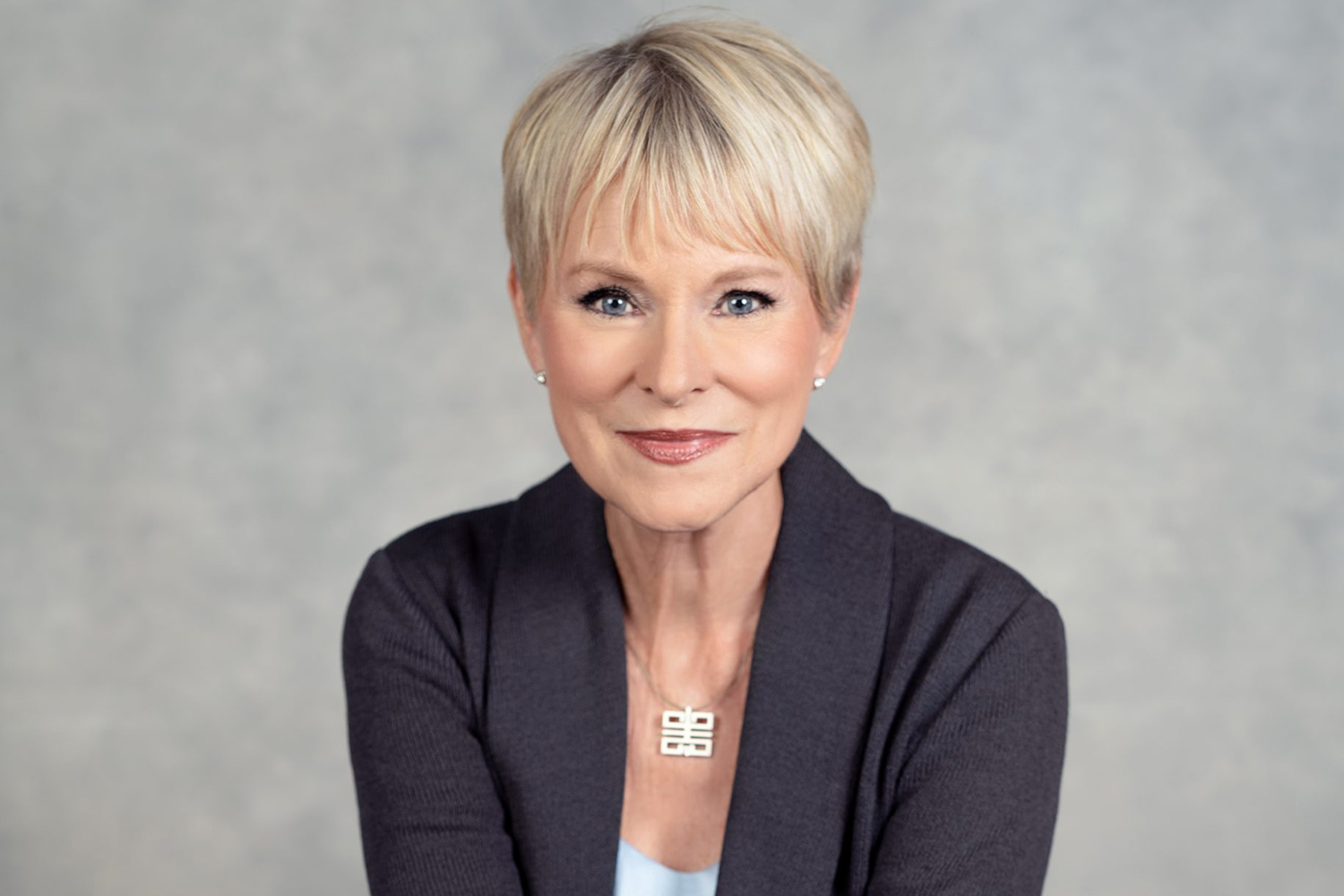
WHETHER WRITING ABOUT A REAL-LIFE American female spy or the hardships endured by World War II prisoners of war, author and journalist Judith L. Pearson has long found purpose in bringing overlooked historical figures to light. Since completing treatment for stage II triple-negative breast cancer in November 2011 at age 57, she has used that same storytelling lens to publish historical accounts of people who influenced cancer research and advocacy.
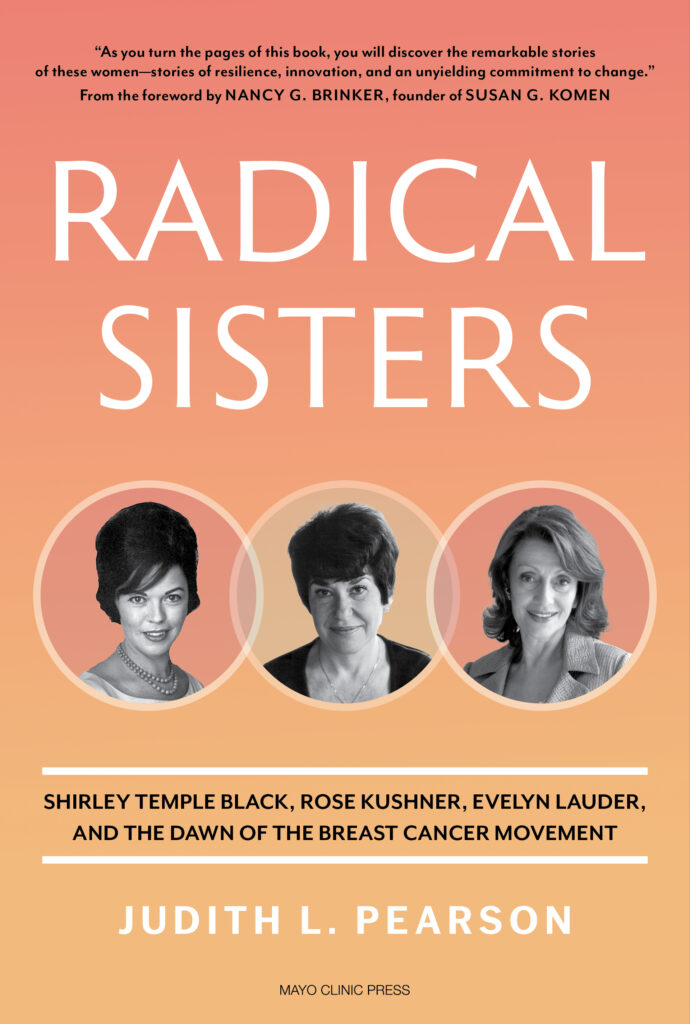
Her third book on the subject, Radical Sisters: Shirley Temple Black, Rose Kushner, Evelyn Lauder and the Dawn of the Breast Cancer Movement, transports readers to the ’70s, a time when breast cancer remained an unspeakable condition shrouded in stigma. Women who felt a lump in their breast would have surgery to biopsy and examine the tissue. If surgeons found cancer, they frequently proceeded to a sweeping operation called the Halsted radical mastectomy, which involved removing the breast, underlying chest wall muscles and nearby lymph nodes. Many women would first learn they had cancer after receiving the disfiguring surgery without ever having a clear opportunity to weigh in on the treatment.
Pearson’s book, published in September 2025, describes how three women with breast cancer demanded more agency in treatment and pushed to increase awareness.
Shirley Temple Black, a former child actor and a U.S. diplomat, publicly disclosed her diagnosis and mastectomy in 1972. She held a press conference from her hospital bed after her mastectomy and wrote about her experience in McCall’s, one of the most popular women’s magazines at the time. Her openness helped encourage women to talk about breast cancer with their doctors and showed that women could still lead productive lives after surgery.
Rose Kushner challenged the medical establishment after rejecting the “one-step” procedure for her own diagnosis in 1974. She advocated to receive a biopsy first and then decided to have a separate modified radical mastectomy, which left the chest muscles and lymph nodes intact. She stressed women should be able to choose their treatments. Around that same time, clinical trials showed the Halsted radical mastectomy offered no survival advantage over less extensive procedures. The National Cancer Institute eventually recognized these surgeries as viable alternatives to radical mastectomy.
In the early 1990s, Evelyn Lauder turned Estée Lauder cosmetics counters into points of outreach, handing out pink ribbons and breast cancer information to women as they shopped. She also founded the Breast Cancer Research Foundation and raised funds to establish the Evelyn H. Lauder Breast Center at Memorial Sloan Kettering Cancer Center in New York City.
Pearson spoke with Cancer Today about how these women’s willingness to speak openly about their diagnoses opened the door for more public discussion about breast cancer.
CT: How did you develop the concept for this book?
PEARSON: As you do research while you are writing different books, you learn about other topics and people along the way. I learned about Rose Kushner when I was doing research on a book about Mary Lasker, a health activist who raised money for cancer research. Rose was someone who was so incredibly brave in the face of her own cancer and insistent that women needed to have a better say in their health care. I pitched the idea of writing a book about Rose to my agent and editor, and they suggested I also add Shirley Temple Black and Evelyn Lauder, who are more well known. It made such a beautiful arc in the story. It was perfect.
With every book I write, people often say to me, “I never heard about this person. I didn’t know that happened.” As I researched Shirley and Evelyn, I learned things that I didn’t know, which also made these characters richer to me.
CT: Did your own experience with cancer influence how you viewed these three women?
PEARSON: As difficult as my own diagnosis was 15 years ago, it was nothing compared to what these women faced. Today, we have the internet, extensive literature and the ability to talk openly with friends who had cancer. When these women were diagnosed with cancer, no one talked about their disease. I felt a tremendous amount of sympathy for them.
Just like these three women, so many survivors I have spoken to get to the end of treatment and say, “That was a ride. What am I supposed to do? I need to help others.” I call it a second act. There’s healing in helping. There’s always treasure in life’s wreckage. If you shine your energy out to the greater world, you forget about how crummy you feel, how sad you are and how frightened you are. These three women did that during a time when there wasn’t support like there is today.
CT: What role does patient advocacy play in improving health outcomes for women?
PEARSON: It’s one thing to have the biggest heart in the world and want to help patients in whatever way you can. But when you’ve navigated the disease, you look at it from a different perspective. Cancer survivors are invaluable to the medical community because they can get the word out to other people about measures for improving detection and different treatment options, and they can help other patients navigate survivorship. That long-term journey lacks adequate attention from researchers, and advocates can help to lead that conversation so people have resources after treatment.
CT: What do you want survivors to learn from reading your book?
PEARSON: There’s a great quote from the cultural anthropologist Margaret Mead: “Never doubt that a small group of thoughtful, committed citizens can change the world. Indeed, it is the only thing that ever has.” That’s so true here. These three women faced this deadly disease, and they wanted to reach out to help their sisters—to advocate and inform so others felt less alone.
This desire to use our experience to help others carries through to modern-day patient advocacy. Today, survivors play a key role across the cancer spectrum, including advocacy, support, lobbying, clinical trials, fundraising and encouraging greater cancer research funding. When enough of us work side by side, more people facing cancer will feel supported.
This interview has been edited and condensed for clarity.
Cancer Today magazine is free to cancer patients, survivors and caregivers who live in the U.S. Subscribe here to receive four issues per year.